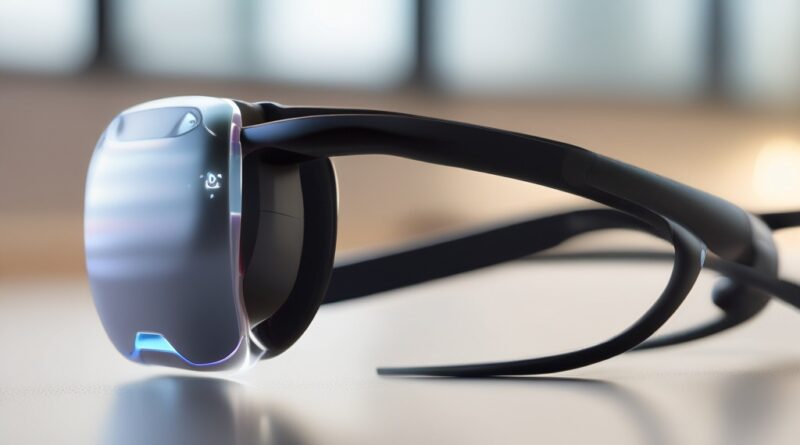
Apple Vision Pro 3 Leaked Specs Reveal 2027 Launch, Lower Price
Leaked supply chain documents reveal the Apple Vision Pro 3 — codenamed “Project Yosemite” — will target a $1,999–$2,499 price point with a 40% weight reduction, potentially arriving Q4 2027.
After fewer than 1 million units sold across two generations, Apple is betting $4 billion a year that this third-generation device finally cracks the mainstream spatial computing market.
What the Apple Vision Pro 3 Leaks Reveal
Leaked supply chain documents, first reported by analyst Ming-Chi Kuo and corroborated by sources close to Apple’s product roadmap, reveal detailed specs for what’s internally called “Project Yosemite” — the Apple Vision Pro 3. The leaks surfaced across multiple Weibo posts from component suppliers and were subsequently analyzed by Bloomberg’s Mark Gurman. They describe a device that’s lighter, more powerful, and drastically cheaper than its predecessors.
The Vision Pro 3 will reportedly run Apple’s upcoming M5 chip alongside a next-generation R3 spatial processing coprocessor. Weight drops to roughly 380 grams, a 40% reduction from the original’s 650-gram bulk. Apple is apparently ditching the aluminum-and-glass construction for carbon fiber composite. Display resolution stays around 23 million pixels per eye, matching current specs, but a new micro-OLED supplier — likely a Sony/LG Display joint venture — should push peak brightness up 30% with meaningfully wider color volume.
The real bombshell is price. Sources say Apple’s targeting $1,999 to $2,499 at launch, slashed from today’s $3,499. Mass production is slated for Q3 2027, with units hitting shelves early Q4.
Why the Price and Weight Cuts Matter
The Vision Pro line has been a strange animal for Apple. Critics love the engineering. Almost nobody’s buying it. The original and its underwhelming 2025 refresh have moved an estimated 800,000 to 900,000 units combined — a rounding error against the 230 million iPhones Apple ships in a typical year. Spatial computing hasn’t proven it can be a real business yet.
These leaks suggest Apple knows that.
“This is the iPhone 3G moment for spatial computing,” said Dr. Ananya Mehta, a mixed-reality researcher at Carnegie Mellon. “The first Vision Pro was a proof of concept sold to enthusiasts and developers. The third generation is Apple’s first serious attempt to make this a consumer electronics category rather than a luxury curiosity.”
The 380-gram weight target matters more than people think. User studies consistently find comfort is the biggest barrier to extended headset use — most people tap out after 45 to 60 minutes with current devices. At that weight, the Vision Pro 3 lands close to high-end ski goggles. Hardware designers have treated this as a critical ergonomic threshold for years, and it’s overdue.
- Key Takeaways
- Apple Vision Pro 3 targets a $1,999–$2,499 price point, down from $3,499 for the current model.
- Weight drops 40% to 380 grams thanks to carbon fiber composite construction.
- The device runs the M5 chip and R3 coprocessor, with 30% brighter micro-OLED displays.
- Mass production is planned for Q3 2027 with a Q4 retail launch.
- Over 2.1 million visionOS developers have been waiting for a larger user base to justify investment.
- Apple spends over $4 billion annually on its spatial computing division despite sluggish sales.
- 70% of previous VR/AR headset owners abandon their devices within six months, per IDC — the benchmark Apple must beat.
Who Stands to Win and Lose
The 2.1 million developers registered for Apple’s visionOS platform have largely been sitting on their hands, waiting for enough users to justify real investment. Meta, which dominates the budget end of mixed reality with its Quest lineup, suddenly faces Apple competing much closer to its turf. Enterprise clients — architecture firms, surgical visualization teams, industrial designers — get hardware that finally falls within procurement budgets.
“The developer ecosystem has been in a holding pattern,” said Raj Sundaram, co-founder of spatial computing startup Prism Labs. “We have clients who built incredible visionOS applications and then watched them collect dust because the user base wasn’t there. A sub-$2,500 Vision Pro changes the math entirely.”
That’s probably underselling it. The original Vision Pro created a chicken-and-egg problem that bordered on absurd — premium hardware with no audience, and developers who couldn’t afford to build for an audience that didn’t exist. A lower price point could finally break that cycle and unlock genuine third-party investment in spatial apps.
What Comes Next for Apple Spatial Computing
Apple hasn’t commented publicly on the leaks. The company will likely preview visionOS 5 at WWDC 2027, which should serve as the software foundation for the new hardware. Analysts expect a redesigned App Store built around spatial content discovery, a move that could give third-party development the momentum it desperately needs.
The timing aligns with broader industry trends. Qualcomm and Samsung are reportedly accelerating their own XR chip programs, and Google has teased Android XR integrations for 2027. Apple’s move to a more accessible price point could trigger a competitive response across the entire tech landscape.
The Bigger Picture for Spatial Computing
According to a 2026 IDC survey, 70% of previous VR/AR headset owners have abandoned their devices within six months. That’s the number Apple has to beat — and weight, price, and software ecosystem are the three levers that matter most.
If Apple delivers on even half of what’s leaked here, 2027 becomes the year spatial computing either proves itself or gets permanently written off as a niche. A lighter, cheaper Vision Pro wouldn’t just move more units. It would force every major tech company to respond with real products instead of concept demos.
The smartphone era took roughly a decade to mature. Spatial computing is still in its opening chapters, but the pace just picked up considerably. For consumers, developers, and the broader tech industry, the Apple Vision Pro 3 represents the most consequential bet in mixed reality since the original device debuted — and this time, Apple appears to be playing for mass adoption rather than applause.