

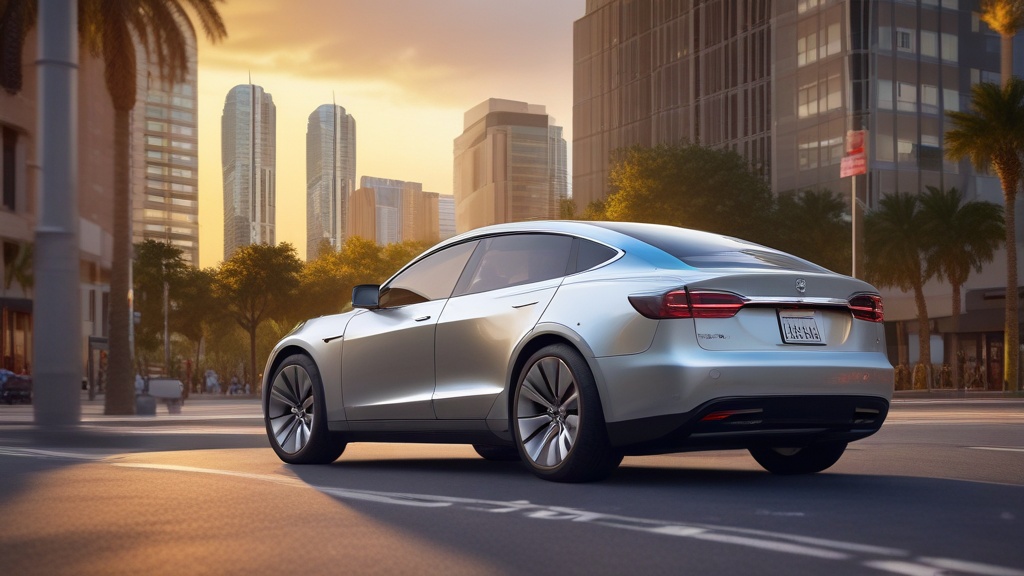
Tesla is deploying its autonomous Cybercab robotaxi service city by city, starting with Austin in June 2025, in a phased strategy that could capture a slice of the projected $1.2 trillion ride-hailing market.
The rollout carries massive implications for 3.4 million rideshare drivers, urban planners, regulators, and every competitor in the autonomous vehicle space.
Tesla Confirms Austin as Robotaxi Launchpad
Tesla has confirmed that its robotaxi service will debut in Austin, Texas, in June 2025 — marking the first commercial deployment of the Cybercab concept on public roads. The initial fleet will run Tesla’s Full Self-Driving supervised software on existing Model 3 and Model Y platforms before transitioning to the purpose-built Cybercab hardware — the controversial two-seater with no steering wheel and no pedals unveiled at the October 2024 “We, Robot” event.
Elon Musk has outlined a broader expansion roadmap that includes Houston, Los Angeles, the San Francisco Bay Area, and Miami, though specific timelines for those cities remain vague. The strategy mirrors the geographic playbook used by Alphabet’s Waymo, which currently operates autonomous ride-hailing in San Francisco, Phoenix, Los Angeles, and Austin, completing roughly 150,000 paid rides per week as of early 2025.
How Tesla’s Approach Differs from Waymo
While Waymo relies on approximately 1,500 specially equipped Jaguar I-PACE vehicles loaded with lidar, radar, and cameras, Tesla plans to leverage its existing global fleet of more than 6 million vehicles — many already equipped with the camera-based hardware Tesla claims is sufficient for full autonomy. This fleet-first approach gives Tesla a potential scale advantage that no competitor can easily replicate.
Musk has projected the dedicated Cybercab will eventually cost below $30,000 per unit to manufacture, enabling fleet economics that could undercut every rival in the autonomous mobility space. Whether that manufacturing target materializes remains one of the biggest open questions in the industry.
Why the City-by-City Tesla Robotaxi Rollout Matters
Morgan Stanley analyst Adam Jonas has estimated Tesla’s autonomous ride-hailing network could be worth $600 billion in enterprise value — roughly equal to the rest of Tesla’s entire business combined. The phased metropolitan rollout is the mechanism through which that theoretical value either materializes or evaporates.
“Tesla’s phased geographic expansion is the only realistic path forward given the current regulatory patchwork in the United States,” said Dr. Mariana Solis, a transportation systems researcher at Carnegie Mellon University. “Each city presents a different combination of road infrastructure, weather conditions, traffic density, and legal frameworks. You can’t flip a national switch. Austin is a smart starting point — it has relatively simple road geometry, favorable weather, and a state government that has been welcoming to autonomous vehicle testing.”
The approach also allows Tesla to build a real-world safety dataset incrementally, city by city. That data is critical for convincing regulators in tougher markets like New York and Chicago — cities that will demand hard performance numbers before granting deployment permits.
- Key Takeaways
- Tesla’s robotaxi service launches in Austin, Texas, in June 2025, using existing Model 3 and Model Y vehicles before transitioning to the dedicated Cybercab hardware.
- The company plans to expand to Houston, Los Angeles, the Bay Area, and Miami, though exact timelines remain unconfirmed.
- Tesla’s camera-only approach and massive existing fleet give it a potential scale advantage over Waymo’s lidar-dependent model.
- Morgan Stanley values Tesla’s autonomous ride-hailing network at $600 billion, making this rollout the single highest-stakes bet in the company’s history.
- An estimated 1.4 million Uber and Lyft drivers face potential displacement as robotaxi costs could drop to $0.25–$0.50 per mile versus roughly $2.00 on current platforms.
- Regulatory hurdles vary dramatically by state and city, meaning each expansion will require a unique approval process.
Who Faces the Biggest Impact
Approximately 1.4 million active drivers work for Uber and Lyft across the United States, and a fully autonomous competitor operating at dramatically lower cost per mile would exert relentless downward pressure on that workforce. Tesla has suggested rides could eventually cost $0.25 to $0.50 per mile, compared to roughly $2.00 per mile on Uber today.
“We need to be honest about the displacement timeline,” said Kevin Rhodes, a labor economist at the Brookings Institution. “It won’t happen overnight, but within five to seven years of a successful robotaxi deployment in a major metro, you could see driver demand in that city fall by 30 to 40 percent. Policymakers need to be preparing transition programs now, not after the fact.”
Beyond drivers, the ripple effects touch consumers, urban planners, and insurers. A city with a dense robotaxi network needs fewer parking structures, different curb management policies, and entirely new liability frameworks. The infrastructure and policy conversations are lagging far behind the technology.
Regulatory Hurdles and Federal Exemptions
Tesla must clear significant regulatory barriers in each target city. Texas currently permits autonomous vehicle operation without a specific permit, but California — where Tesla is headquartered — requires a DMV-issued deployment license. That process has taken competitors years to navigate successfully.
The company is also expected to file for federal exemptions from the National Highway Traffic Safety Administration (NHTSA) to deploy Cybercabs without traditional manual controls at volume. Securing those exemptions will require extensive safety documentation and could introduce additional delays to the broader rollout timeline.
Industry-Wide Implications
Tesla’s city-by-city strategy is forcing the entire automotive and mobility industry to respond. GM has already shut down its Cruise robotaxi subsidiary. Uber has signed autonomous vehicle partnerships with Waymo and others as a defensive hedge. Legacy automakers face a stark new reality: the company that wins the robotaxi race doesn’t just sell cars — it sells miles. And miles represent a far larger addressable market than vehicle sales alone.
The competitive landscape is narrowing rapidly. Companies that lack autonomous capability or fleet-scale infrastructure risk being locked out of what ARK Invest projects will be a $1.2 trillion ride-hailing market by 2030. Tesla’s bet is that its vertically integrated approach — manufacturing vehicles, developing AI software, and operating the ride-hailing network — will create an unassailable cost advantage.
The road ahead is measured in cities conquered, not units shipped. With Austin now on the clock, every subsequent city launch will be a referendum on whether Tesla can deliver on the most ambitious promise in modern automotive history.